
Lisbon Neighborhoods for Remote Workers
2026 Honest Local Guide
Lisbon in 2026 is not the bargain it was in 2020. Rents have climbed 30–40% in popular areas, brunch spots have multiplied, and the words "digital nomad" now draw an eye-roll from some locals. But here's what hasn't changed: the light is still absurdly beautiful, the food scene keeps getting better, and the city packs 2,800+ hours of sunshine into a very walkable footprint. Internet is fast everywhere — that's no longer a differentiator. What actually matters now is which neighborhood fits your life.
We're oxigen-rent.com, a tech rental service in Lisbon — we deliver laptops, monitors, and gear to digital nomads from 25+ countries. That means we see something most travel bloggers don't: the actual delivery addresses where remote workers live and work. We analyzed our data and the results surprised us.
Below is what we found — and an honest look at each neighborhood, good and bad.
How We Picked These Neighborhoods
We ranked every neighborhood against seven criteria: walkability, coworking access, noise level, safety feel after dark, value for money, public transport, and community vibe. Then we cross-referenced that with our own delivery data and on-the-ground experience — we deliver tech to remote workers across the city, so we know where they actually live. The order below goes from most popular among our clients to least — not from most Instagrammable to least.
The Neighborhoods
1. Arroios, Areeiro & Eastern Lisbon — "The Multicultural Powerhouse"
Our #1 zone — 20% of all deliveries.
This is the area most guides either skip or squeeze into one paragraph, and yet one in five of our clients lives here. The zone stretches from Arroios (Lisbon's most diverse neighborhood by a wide margin) through Areeiro (practical, residential, well-connected) to Penha de França (panoramic views, real-deal local life) and Beato — an emerging creative and tech quarter anchored by Hub Criativo do Beato, a massive riverside innovation campus in a former military complex.
Within a few blocks of Arroios you'll find Nepali momos, Mozambican prawns, Chinese dumpling houses, and Brazilian bakeries. New wine bars sit next to old barbershops. Areeiro, next door, is quieter and more residential — the kind of neighborhood where you can do your grocery shopping without hearing a word of English.
Best for: Budget-conscious nomads, food lovers, people who value diversity and street-level energy over polish. Creatives and tech workers drawn to the Beato scene.
Pros: Cheapest of the central neighborhoods. Some of the best food in the city, across every cuisine. Metro stations at Intendente, Anjos, and Areeiro keep you well connected. Multiple sources rank Arroios among Lisbon's safest neighborhoods during daytime, with good police visibility and active foot traffic. Hub Criativo do Beato is drawing serious creative energy to the eastern end.
Cons: Some streets feel rough after dark — not dangerous, but gritty. Gentrification is in full swing, which means construction noise and rising rents. What's affordable today may not be next year. Nomad community forums flag Arroios as "the next big thing" — which also means it's changing fast.
Coworking: Hyggelig and Espaço Arroios in the neighborhood; Beta-i Coworking nearby. Hub Criativo do Beato for those on the eastern end.

Lisbon night view from the Graça miradouro
2. Estrela, Lapa & Santos — "The Quiet Creative Quarter"
Our #2 zone — 16% of deliveries.
Cobblestone streets with character but without the tourist stampede of Alfama. Santos is quietly becoming a design district, Lapa has embassies and old-money charm, and Estrela has one of Lisbon's best parks — Jardim da Estrela, where you'll see more locals reading newspapers than influencers posing.
Best for: Creative professionals, couples, anyone who wants authentic Lisbon atmosphere without Bairro Alto's 2 AM noise.
Pros: Beautiful architecture, proximity to the river, walkable to LX Factory, and noticeably quieter than central neighborhoods. Nomad bloggers consistently recommend Santos as an up-and-coming area with new cafes and more affordable prices compared to Príncipe Real. Jardim da Estrela is one of Lisbon's best parks — genuinely relaxing, not just photogenic.
Cons: Fewer coworking spaces within walking distance. The hills are serious — not ideal if you have mobility concerns. Parts of Santos and Estrela fall under the airport flight path, though the impact is less intense than in Avenidas Novas. Lapa, being lower and further west, is generally quieter on this front.
Coworking: Impact Hub at LX Factory (about 15 minutes on foot) and Resvés in neighboring Campo de Ourique.
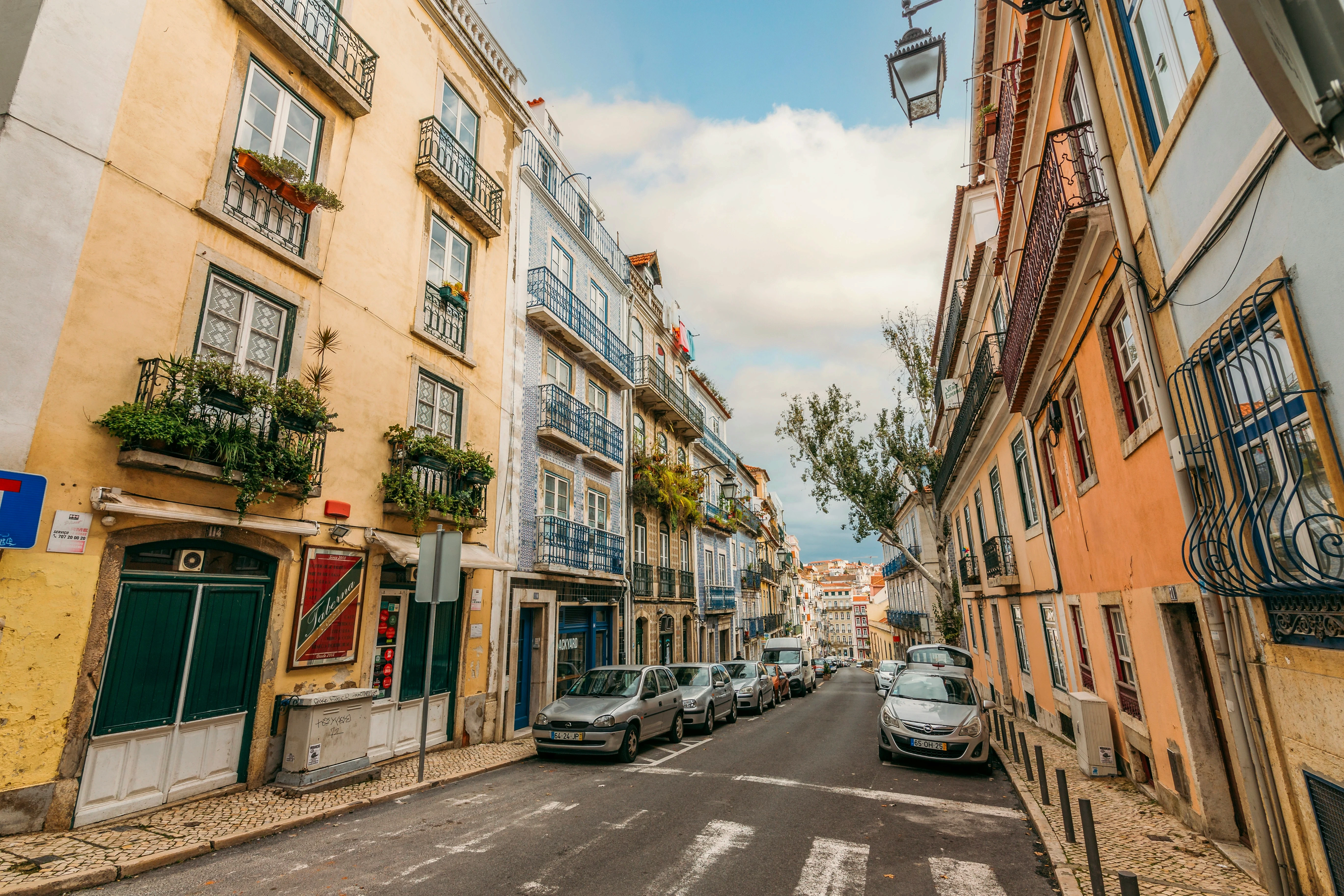
Street view of Lisbon’s Rua da Esperança
3. The Historic Center — Alfama, Graça, Chiado, Bairro Alto & Cais do Sodré — "The Postcard (With Fine Print)"
Our #3 zone — 14% of deliveries.
This is the Lisbon you've already seen on Instagram. Pink Street, Time Out Market, rooftop bars, Bertrand bookshop, trams grinding past, Fado drifting from Alfama doorways, Graça's sweeping miradouros. It's walkable, social, and packed with other nomads. You will not be bored and you will not be alone.
We're combining what most guides split into separate sections, because the honest truth is: for remote workers choosing where to live, the entire historic core shares the same tradeoffs — stunning to visit, complicated to live in long-term.
Best for: First-timers in Lisbon, social nomads, people who want everything at their doorstep for 2–4 weeks. The Lisbon Digital Nomads Meetup regularly draws 100–300 people on Thursday nights — this is where the community gathers.
Pros: Unbeatable density of restaurants, bars, and cultural events. Several coworking spaces within walking distance. You never need transport. Graça's viewpoints are among the best in Europe. Alfama's atmosphere is genuinely magical at the right hour.
Cons: Bairro Alto is genuinely loud at night — Thursday through Saturday, expect bar noise until 3 AM. Tourists dominate the streets during the day. Older buildings here can be damp, dark, and poorly insulated. Mold is a real issue in winter — check before you sign. Multiple expat reviews flag noise from both nightlife and construction as the top complaint. Alfama's steep, narrow streets make it hard to get deliveries and move furniture. Graça is quieter but isolated — fewer services, fewer restaurants, long uphill walks.
Coworking: Second Home (beautiful but expensive at ~€25/day), Heden Chiado (~€10/half-day, better value), Outsite.
Honest take: Great place to start. Most nomads who stay longer than a month end up relocating to quieter neighborhoods. Think of it as your orientation phase, not your long-term base.
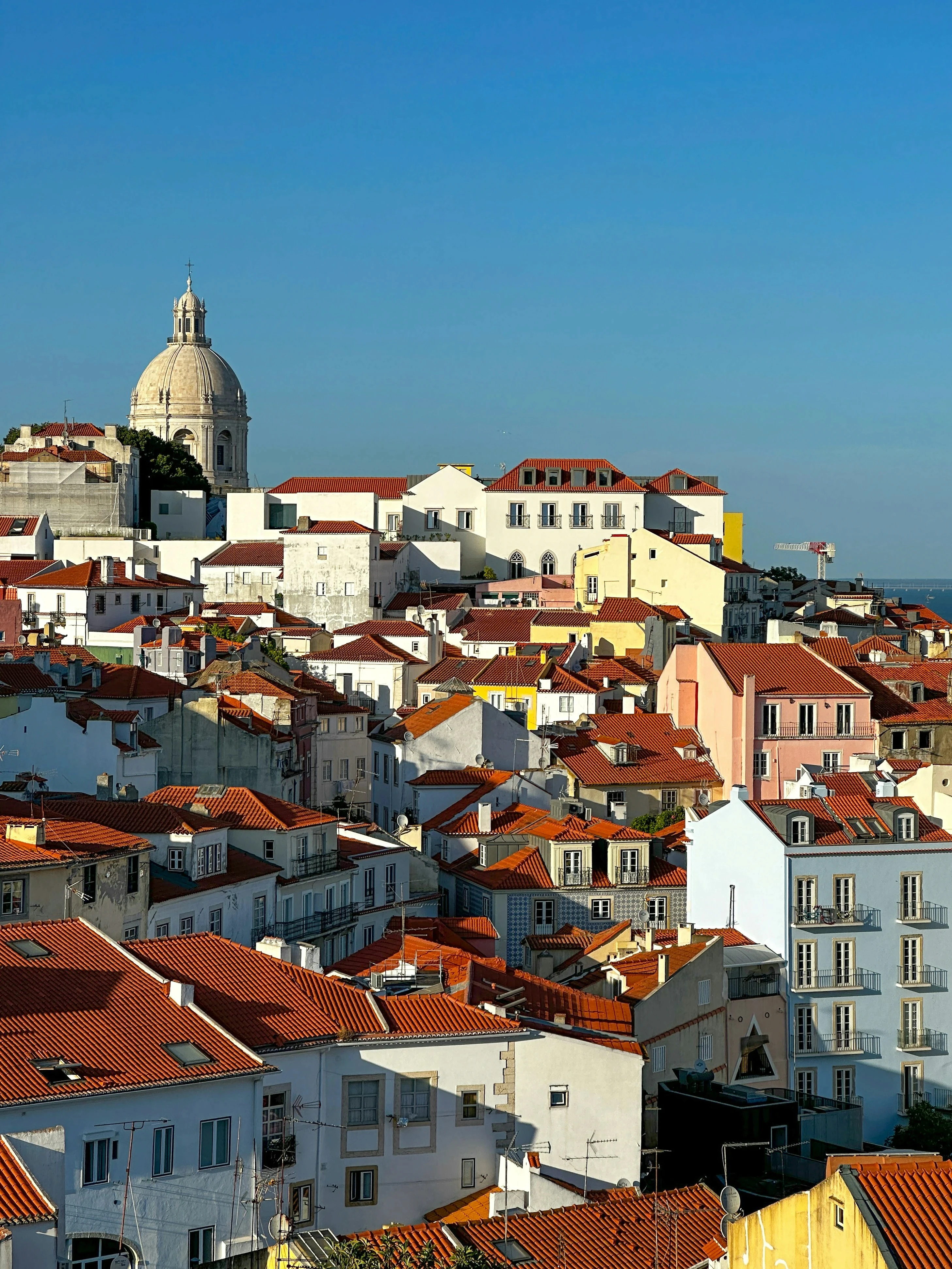
Postcard view of Alfama
4. Avenidas Novas & Saldanha — "The Productive Hub"
11% of our deliveries.
Wide, tree-lined avenues. Modern buildings. Zero tuk-tuks. Avenidas Novas is where Lisbon actually works — offices, consultancies, lunch spots full of Portuguese professionals. If you need to get things done rather than photograph tiles, this is where you plant yourself.
Best for: Focused remote workers, people on US/UK time zones who want quiet mornings and good infrastructure.
Pros: Saldanha metro station connects two lines, making you 15 minutes from anywhere. Supermarkets (including El Corte Inglés food hall) are excellent. Quiet at night. Relatively close to the airport. As one Tripadvisor reviewer put it — locals who live in the Saldanha area don't even notice the planes anymore, but if you're not used to it, you will at first.
Cons: Not the prettiest neighborhood for weekend strolls. Almost no tourist attractions, which means fewer cute cafes on every corner. Important: Avenidas Novas sits under the flight path to Lisbon airport. Depending on your exact street and floor, airplane noise can range from barely noticeable to significant. Double-glazed windows help a lot — always check before signing. Lisbon has a night flight ban (roughly 11 PM–6 AM), so sleep isn't usually affected.
Coworking: Avila Spaces (named Best Coworking Space in the World at the Global Startup Awards — genuinely good, not just award-good) and Spaces at Marquês de Pombal.
Our recommendation: this neighborhood is full of diverse spots—our favorites for dinner are the Italian Ristorante Mattarello and the Armenian Ararate.
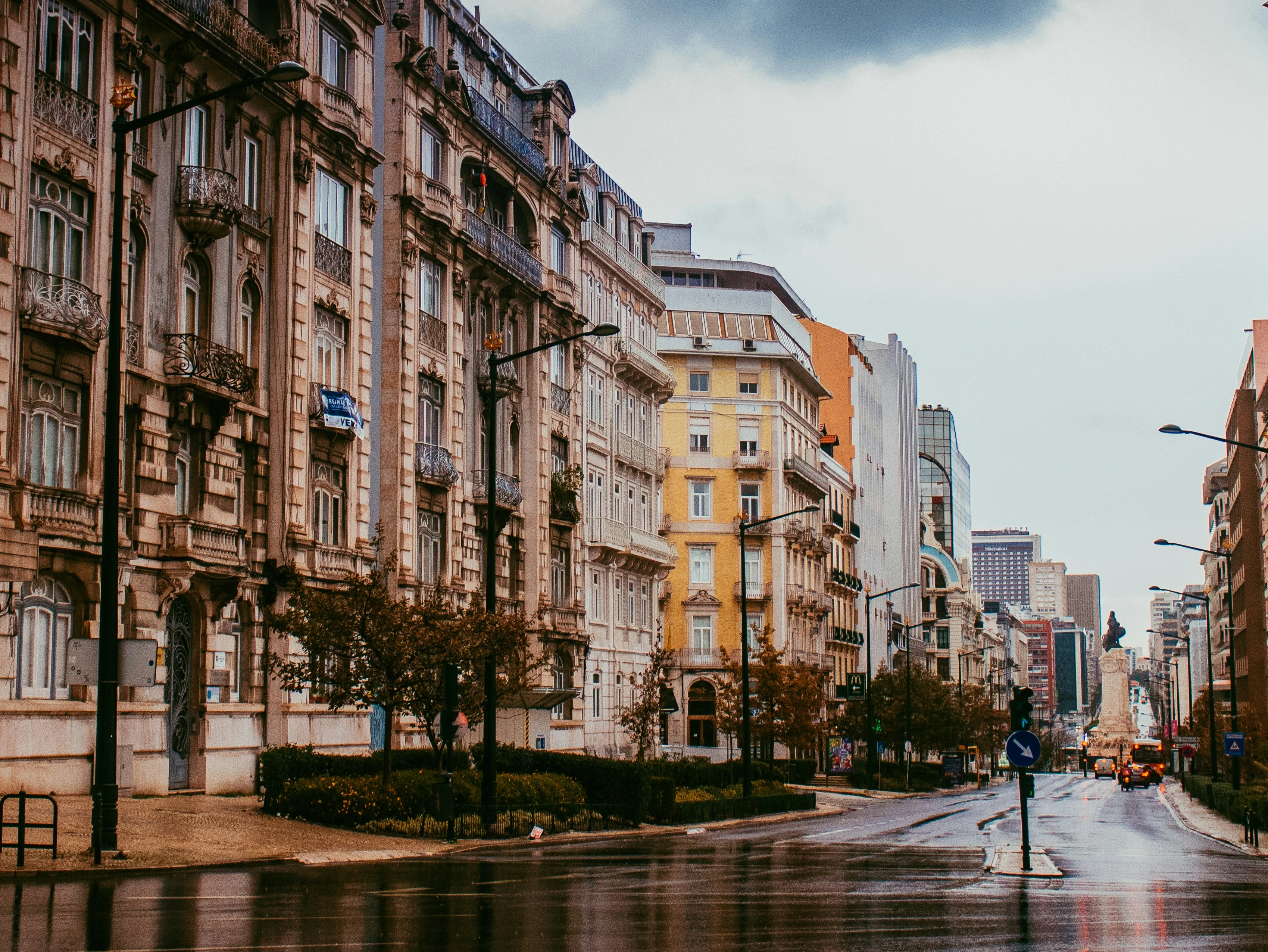
Avenidas Novas neighbourhood
5. Alcântara & Belém — "The Riverside Creative"
11% of our deliveries.
Industrial-chic along the Tagus. The anchor here is LX Factory — a repurposed industrial complex that houses coworking spaces, restaurants, a weekend market, and bookshops. Outside the factory walls, Alcântara is calm and riverside, with a long promenade good for running. Belém, further west, adds museums, pastéis de Belém, and green space — a quieter, more scenic extension of the same riverfront strip.
Best for: Creative entrepreneurs, designers, photographers who like their workspace with an edge.
Pros: LX Factory gives you coworking, food, and culture in one campus. Riverside paths are beautiful. Close to Belém's museums if you need a culture fix. Good value. Safety-wise, the waterfront area is well-patrolled and feels comfortable even after dark. Belém itself sits outside the primary flight path and is generally quieter.
Cons: Feels slightly cut off from central Lisbon. Nightlife is limited. Getting home late from Bairro Alto means a taxi. Alcântara is directly under the airport flight path — noise sources confirm it's one of the more affected neighborhoods. If airplane noise bothers you, pay close attention to the exact street and insist on double glazing. Belém is a better bet for noise-sensitive people.
Coworking: Impact Hub Lisbon, Village Underground.
Our recommendation: hop on a bicycle to ride along the riverside, then stop for a relaxed brunch at Augusto.

Riverside view in Belém with the 25 de Abril Bridge stretching across the Tagus River
6. Campo de Ourique & Campolide — "The Local's Favorite"
7% of our deliveries.
A village inside a city. Flat grid streets (rare in Lisbon), a covered market that's more locals than tourists, independent bookshops, and an almost aggressive level of quiet. Campo de Ourique is where Lisbon's own professionals live when they want peace without leaving the city. Multiple nomad bloggers call it "the best-kept secret" for focused work.
Campolide, its more utilitarian neighbor, sits next to the Amoreiras shopping center. Less charming, but convenient — and a bit cheaper.
Best for: Nomads who want to live like locals, introverts, families, anyone prioritizing focus over nightlife.
Pros: Mercado de Campo de Ourique is the best food market in the city for actual shopping and eating (not a tourist attraction). The neighborhood is walkable, flat, quiet, and has real community feel. Campolide adds Amoreiras shopping for anything you can't find locally.
Cons: No metro station — you're reliant on the tram 28 (slow, crowded with tourists) or buses to reach the center. This is a dealbreaker for some. Campo de Ourique also sits under the airport flight path — the noise is real, though many residents say you get used to it within weeks. Check the specific street. Campolide has less character and can feel more like a transit zone than a neighborhood.
Coworking: Resvés — a neighborhood favorite at €15/day with community lunches on Wednesdays. Fair warning: the waitlist for a permanent desk is five months long.
Our recommendation: for the best food and wine, head to Mercado de Campo de Ourique —a lively market full of local flavors, fresh produce, and cozy spots to taste everything from traditional Portuguese dishes to international bites.
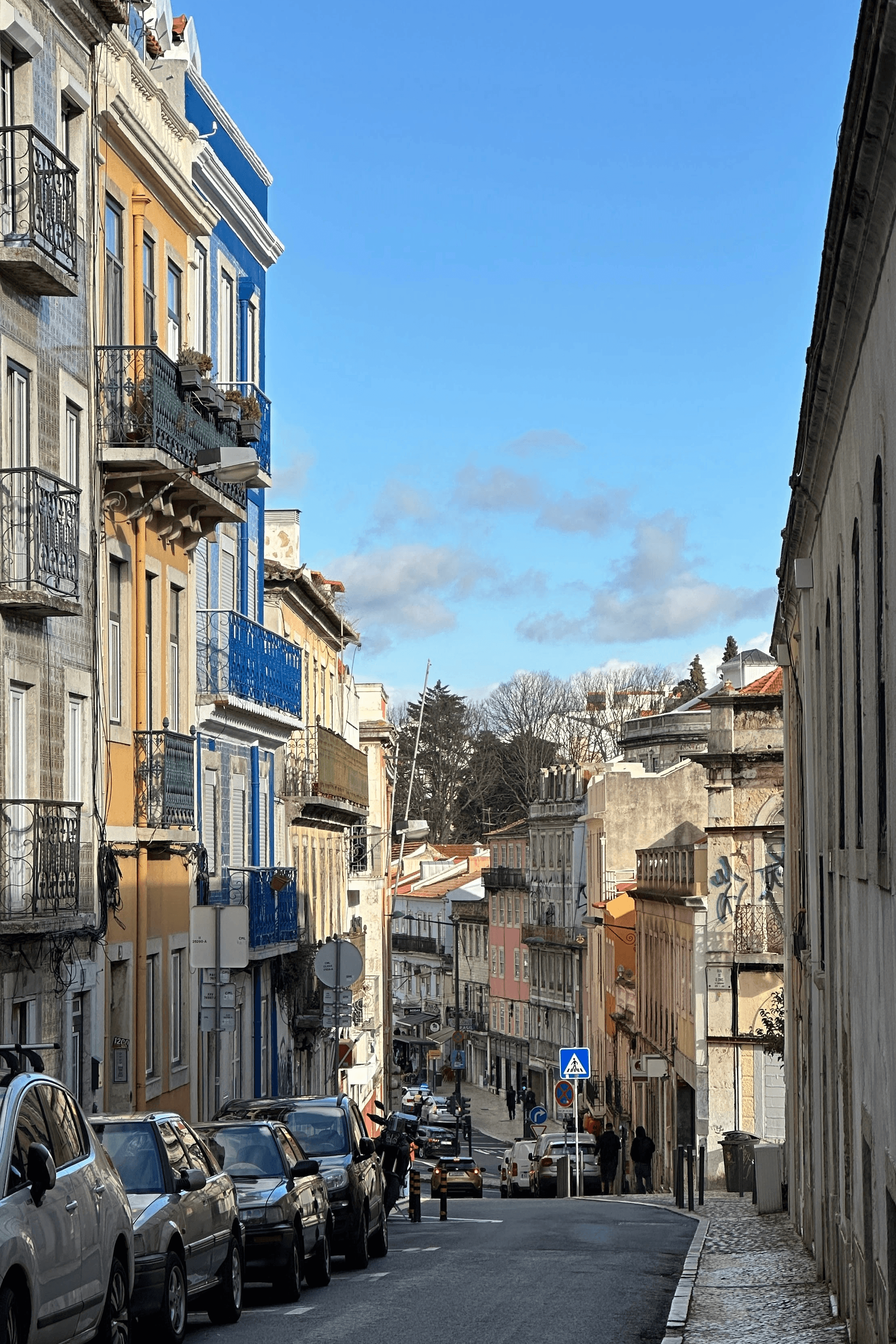
Campo de Ourique street view
7. Avenida da Liberdade & Marquês de Pombal — "The Grand Boulevard"
7% of our deliveries.
Lisbon's answer to the Champs-Élysées. Luxury hotels, designer boutiques, theaters, and a wide tree-shaded promenade running straight down the middle. This isn't a neighborhood where you bump into other digital nomads at a coworking space — it's where people stay when they want the most central, most upscale address in the city.
Best for: Business travelers on shorter stays, those who value prestige and an ultra-central location above all else.
Pros: Maximally central. Major metro hub at Marquês de Pombal (junction of two lines). Walking distance to virtually everything. Upscale dining, well-maintained streets, and a sense of order that much of Lisbon's historic core lacks. Parque Eduardo VII is right there for morning runs.
Cons: Expensive. Heavy traffic noise on the avenue itself — side streets are quieter but still urban. Very little local feel. Surprisingly few everyday grocery stores. It's more hotel corridor than neighborhood. Not where community happens.

View of the Marquês de Pombal statue and Avenida da Liberdade from Parque Eduardo VII
8. Parque das Nações — "The Underrated Modern One"
Our pick — not a top delivery zone, but a neighborhood we highlight because it solves problems other areas can't.
This is the neighborhood most guides skip — and that's exactly why some remote workers love it. Built for Expo '98, Parque das Nações feels like a different city: wide boulevards, modern apartments with proper insulation and heating, riverside promenades, and almost zero tourists. It's not charming in the Alfama sense. It's comfortable in the "I have a Zoom call in ten minutes and my apartment actually works" sense.
Best for: Families, couples who want a quiet base, anyone who values modern infrastructure over old-world character. People who've had enough of damp old buildings and want reliable heating in winter.
Pros: One of the safest neighborhoods in Lisbon — well-lit, monitored, and consistently praised in expat reviews. Flat terrain (a rare luxury in this city). Excellent for families: the Oceanário is world-class, green spaces are plentiful, and the riverside promenades are great for walking, running, or cycling. Gare do Oriente metro/train hub connects you everywhere. Vasco da Gama shopping center covers daily needs. And crucially: this is one of the few central neighborhoods not under the airport flight path. The airport is nearby for travel convenience, but the flight routes pass over other parts of the city.
Cons: It can feel sterile compared to Lisbon's historic core. Nightlife is nearly nonexistent. The nomad social scene is centered elsewhere — if community matters to you, you'll need to commute to events. Some remote workers describe it as "could be any European city" — you lose the Lisbon character in exchange for modern comfort.
Coworking: Limited options within the neighborhood itself, but Gare do Oriente gets you to central coworking spaces in 15 minutes. Some nomads here work from riverside cafes or their (well-equipped) apartments.
Our recommendation: Honest Greens - healthy and delicious food and with a river view.
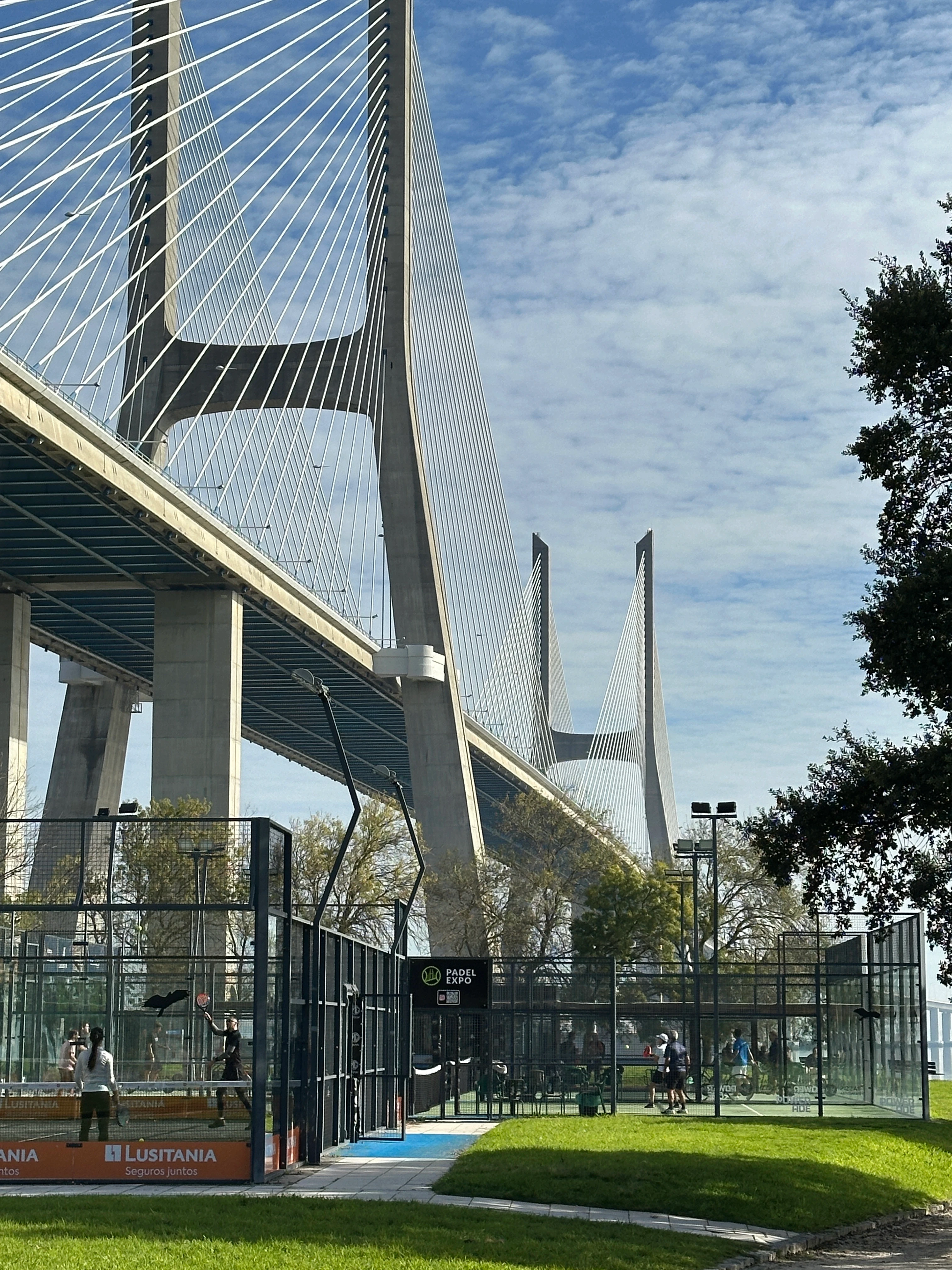
View of the Vasco da Gama Bridge in Parque das Nações
9. Beyond Lisbon — Carcavelos, Costa da Caparica & Ericeira
9% of our clients choose to live outside Lisbon entirely. Here's why.
Carcavelos: A beach town 30 minutes from Cais do Sodré by train. Home to the Nova SBE university campus, a growing surf community, and notably lower rents. You get sand, surf, and a direct rail line to the city.
Costa da Caparica: A long stretch of Atlantic beach across the river. The most budget-friendly option on this list, with strong surf culture. The tradeoff: getting into Lisbon takes longer and is less convenient.
Ericeira: A UNESCO World Surf Reserve about an hour north. A dedicated nomad community has built up here with coworking spaces and regular meetups. If your workday ends with a sunset surf session, this is your place.
Best for: Surf-lovers, people tired of city life, couples with flexible schedules.
Our recommendation: visit Liberty cafe for a brunch and then stroll along the beach to the Oieras.
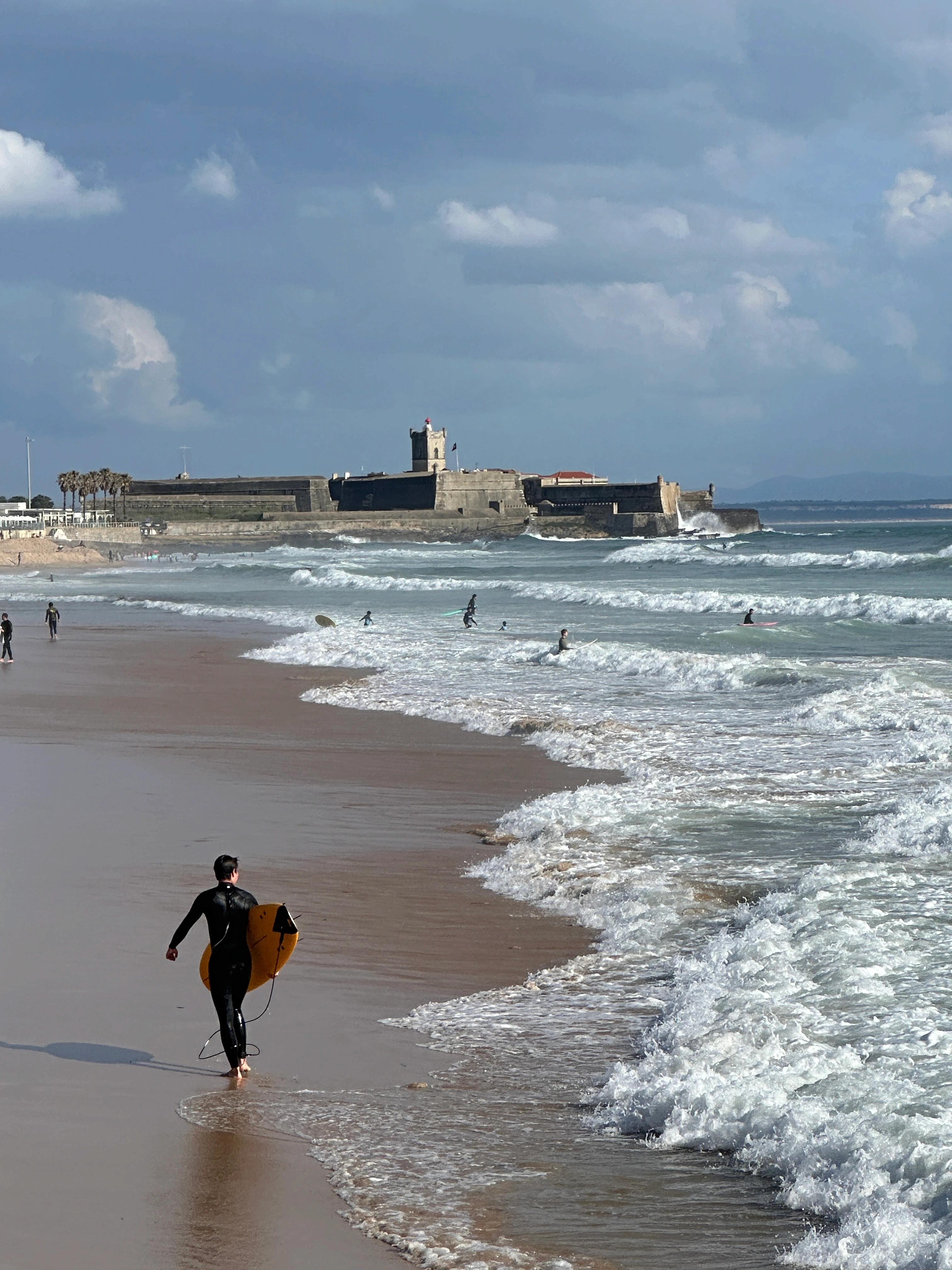
Carcavelos Beach (Praia de Carcavelos)
Ready to Find Your Lisbon Base?
We rent laptops, monitors, and tech gear to digital nomads across all the neighborhoods in this guide — delivered to your door within 24 hours, no deposit required. Need a work setup while you find your feet in Lisbon?
Anna
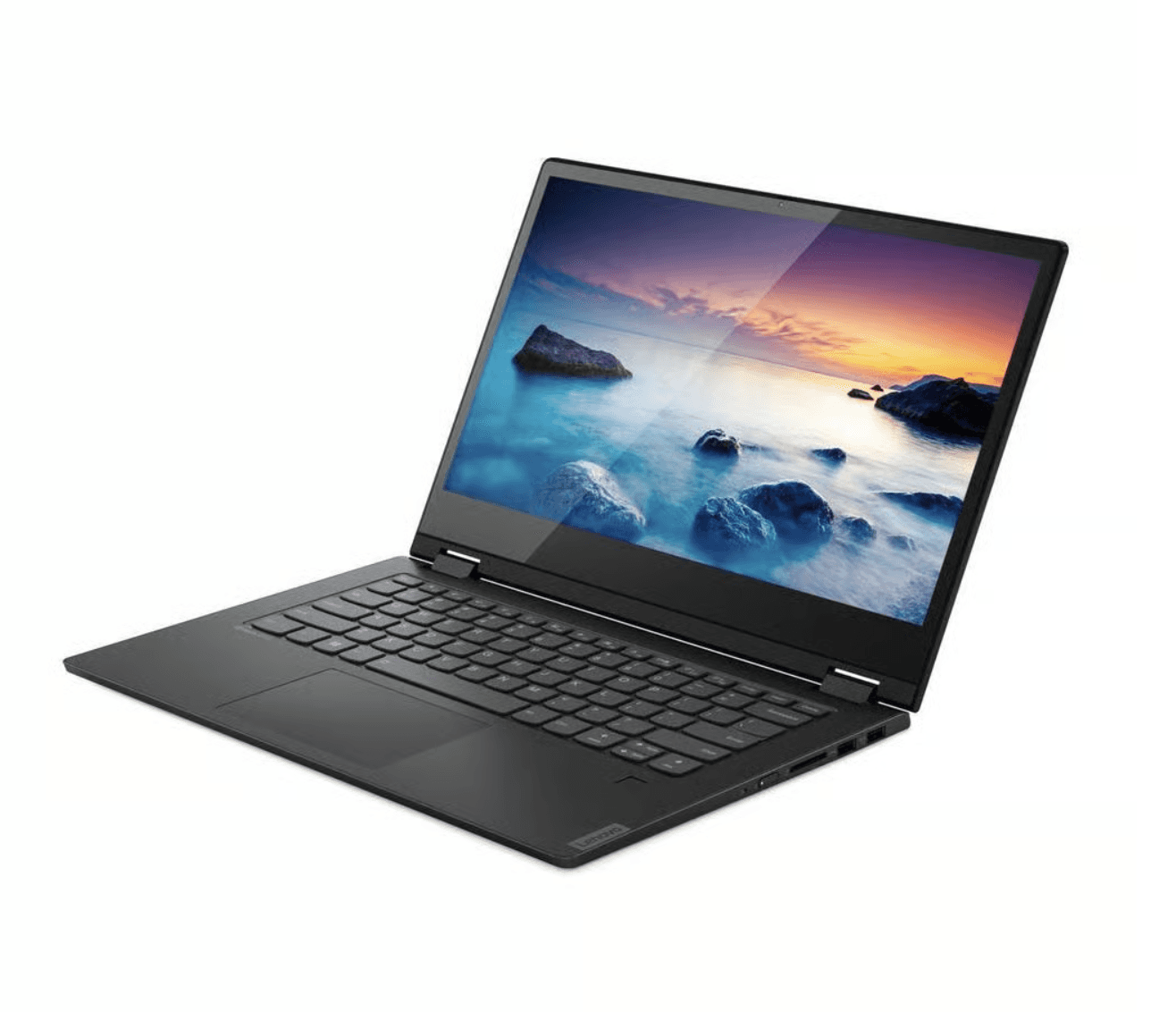
Check our products:



More news:

The Best Rental Services for Digital Nomads in 2026
Wherever You Land

🚚 Temporary Pause in Deliveries and Pickups: September 9–29
Important Service Update

Renting a Laptop for Travel
The smarter way to stay online on the road

The Tenant Profile That Pays More for the Same Apartment
A practical guide for landlords and property managers in Lisbon
View all ⟩
How does it work?

Browse our platform, find the gear you need, and choose how long you'd like to rent it. We’ll guide you through a quick verification process. Once approved, your order is confirmed and processed.
We deliver your equipment within 24 hours. Use it for as long as you need, and when you’re done, just let us know - we’ll pick it up.
Renting has never been easier.
How long can I rent for?

What happens if the item breaks or is damaged?
How does delivery work?
Where do you deliver?
What is the condition of the equipment?
How do I pay?
What is identity verification?
Can you pre-install specific software, such as Microsoft Office or Excel?